
Theatre Royal Newcastle tickets 5 June 2027 - Hadestown | GoComGo.com

Hadestown

Theatre Royal Newcastle, Newcastle upon Tyne, Great Britain
All photos (7)
Select date and time
2:30 PM 7:30 PM
From
US$ 129

E-tickets: Print at home or at the box office of the event if so specified. You will find more information in your booking confirmation email.

You can only select the category, and not the exact seats.
If you order 2 or 3 tickets: your seats will be next to each other.
If you order 4 or more tickets: your seats will be next to each other, or, if this is not possible, we will provide a combination of groups of seats (at least in pairs, for example 2+2 or 2+3).

Important Info
Type: Musical
City: Newcastle upon Tyne, Great Britain
Starts at: 19:30

E-tickets: Print at home or at the box office of the event if so specified. You will find more information in your booking confirmation email.

You can only select the category, and not the exact seats.
If you order 2 or 3 tickets: your seats will be next to each other.
If you order 4 or more tickets: your seats will be next to each other, or, if this is not possible, we will provide a combination of groups of seats (at least in pairs, for example 2+2 or 2+3).

Overview

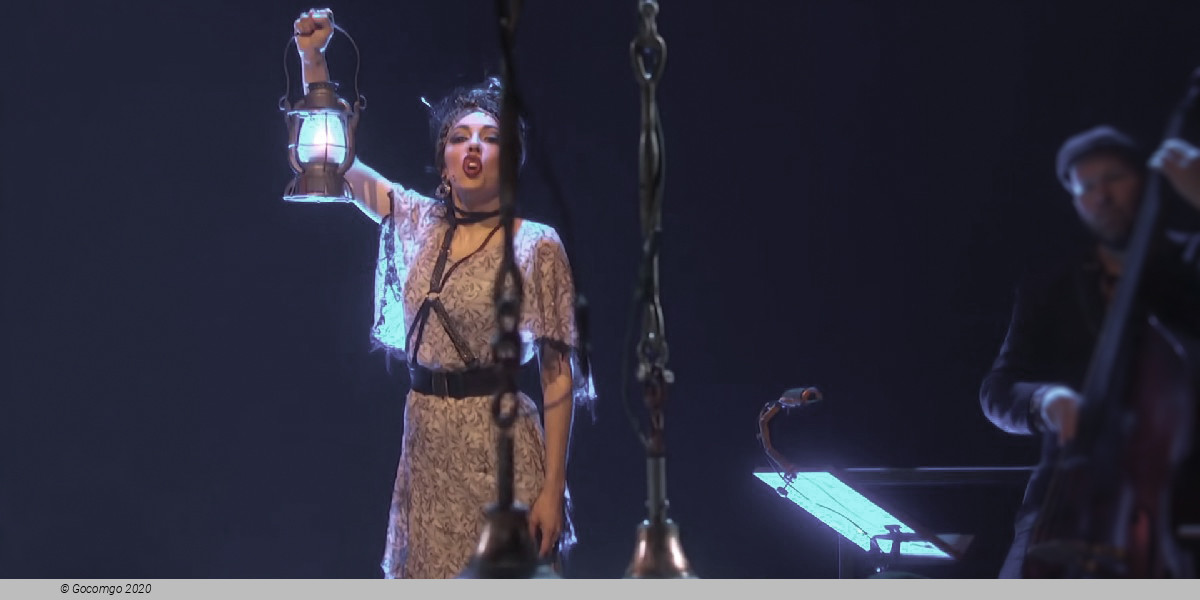
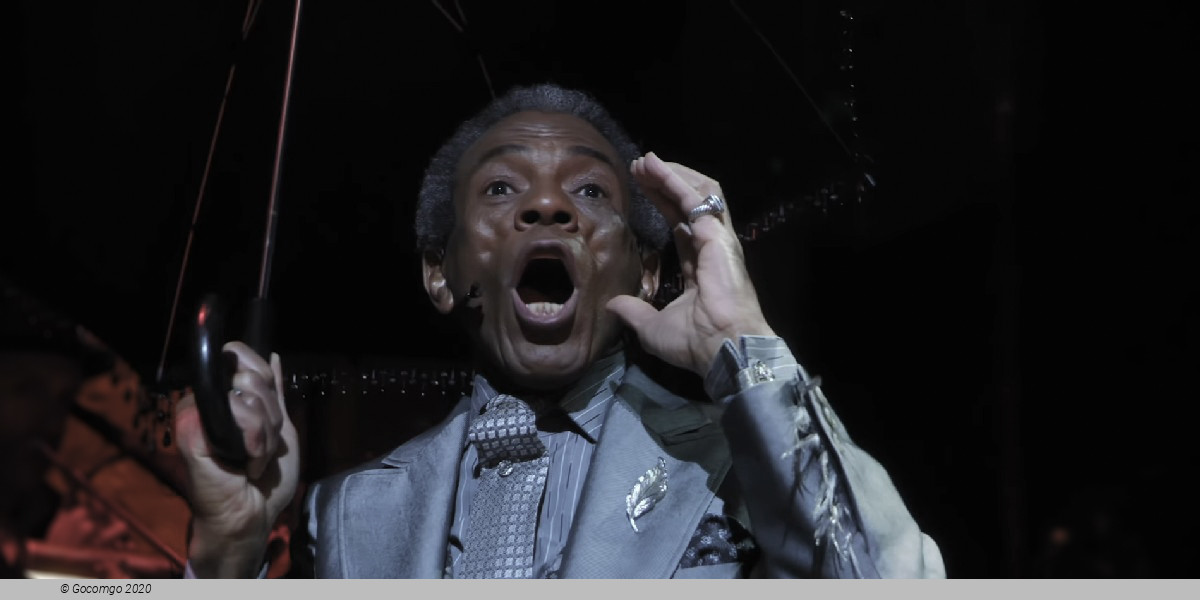
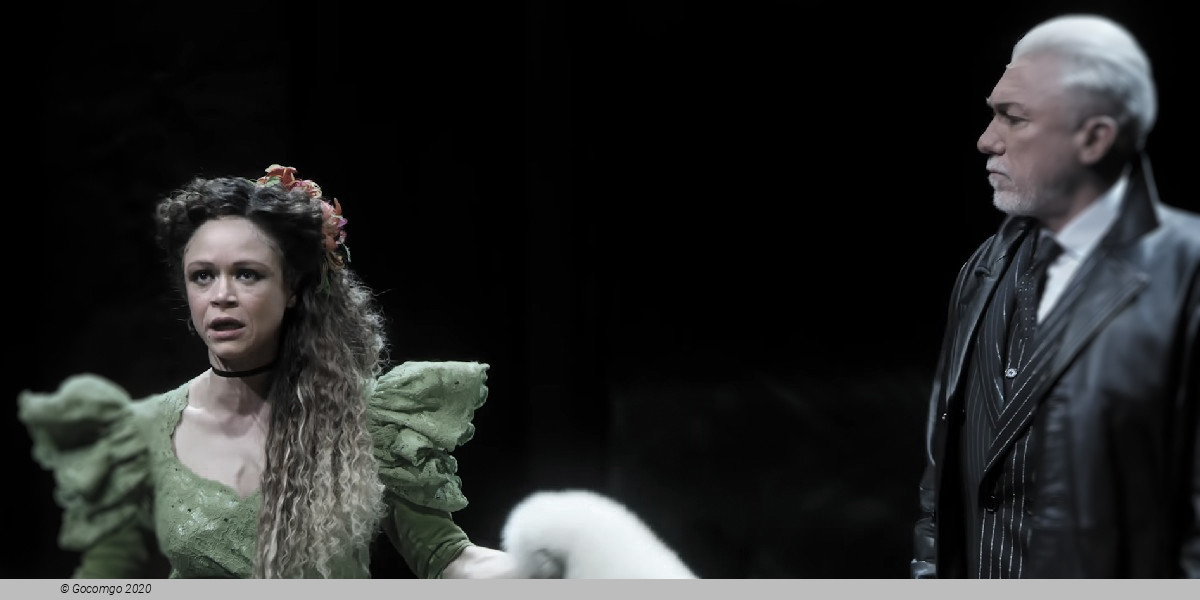
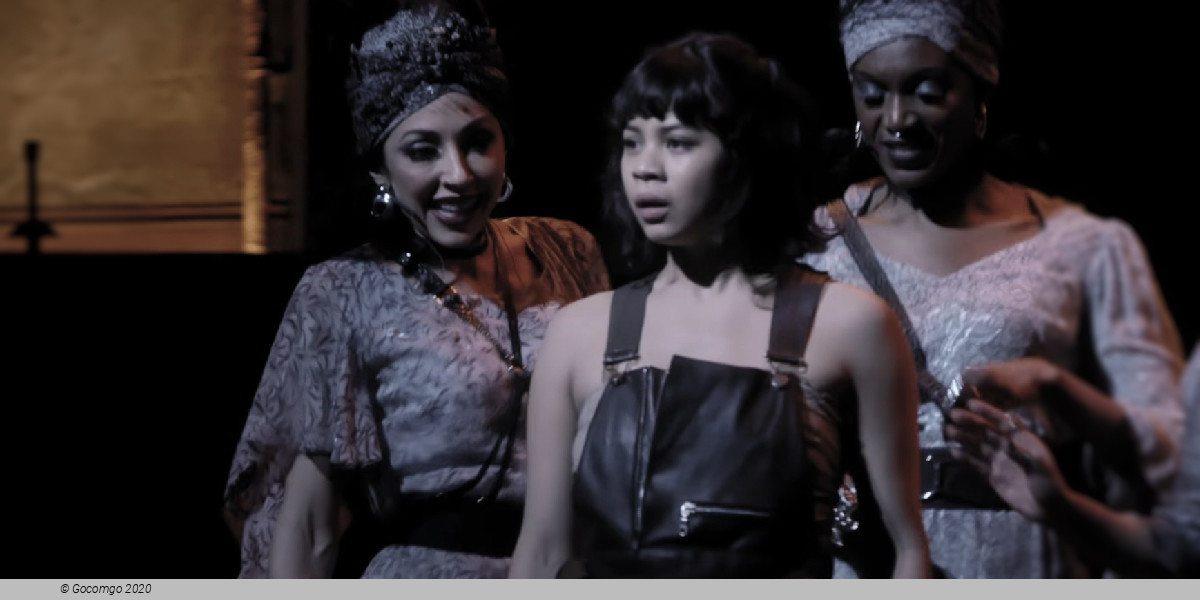
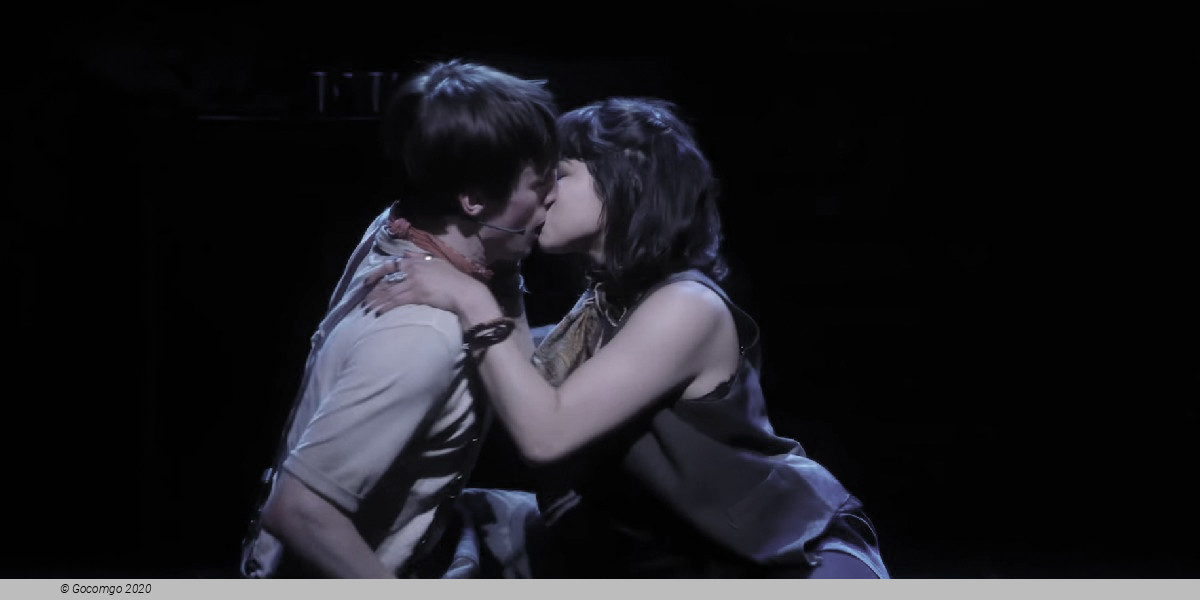
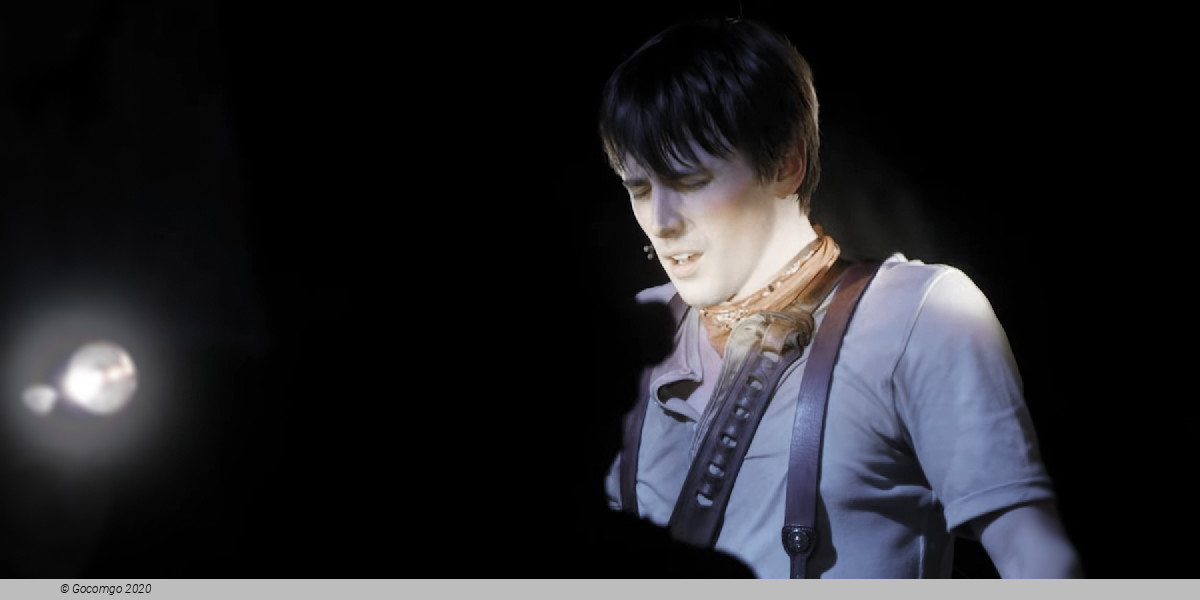
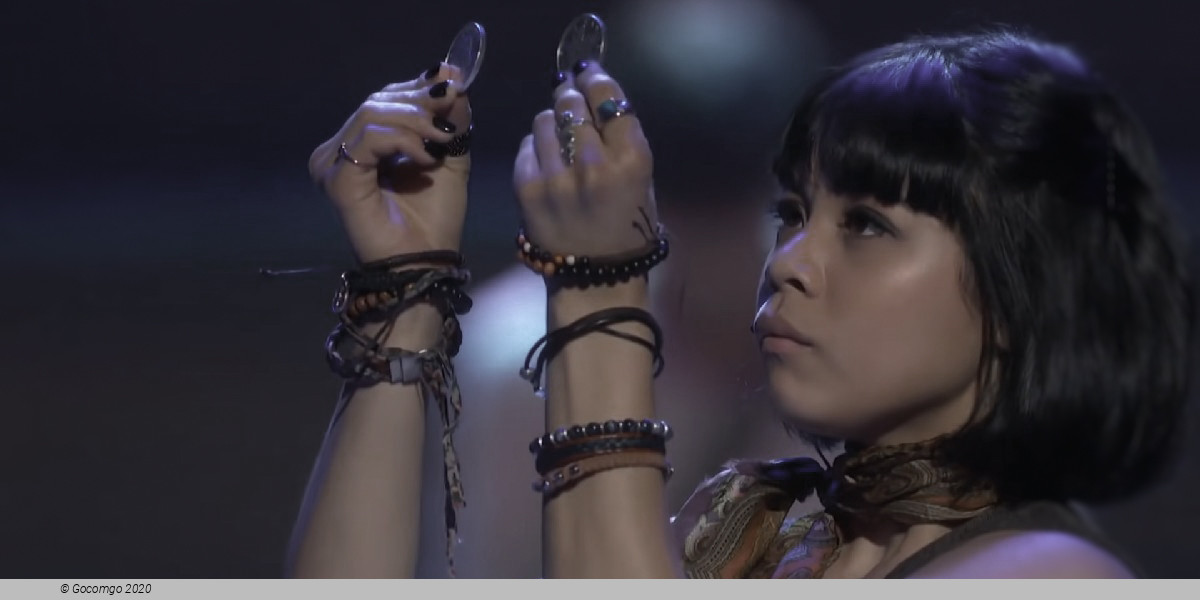
Welcome to Hadestown, where a song can change your fate.  The acclaimed Broadway musical phenomenon by singer-songwriter Anaïs Mitchell and director Rachel Chavkin, is now playing at the Lyric Theatre.  ‘An epic celebration of music, togetherness and hope’ (Forbes), Hadestown is the winner of 8 Tony Awards® including Best Musical and the Grammy Award® for Best Musical Theatre Album.  Take an unforgettable journey to the underworld and back, intertwining two mythic love stories – that of young dreamers Orpheus and Eurydice, and that of King Hades and his wife Persephone.  A deeply resonant and defiantly hopeful theatrical experience, the show invites you to imagine how the world could be.

History
Premiere of this production: 30 November 2005, Barre, Vermont, USA

Hadestown is a musical with music, lyrics and book by Anaïs Mitchell. It tells a version of the ancient Greek myth of Orpheus and Eurydice, where Orpheus goes to the underworld to rescue his lover, Eurydice.

Synopsis

Act I

The story begins with the Greek God, Hermes, introducing the characters (“Road to Hell”). This is followed by the Fates and Eurydice describing the harsh weather and famine of the setting (“Any Way the Wind Blows”). Orpheus, Hermes’s ward, introduces himself to Eurydice and asks her to marry him (“Come Home With Me”). Eurydice, however, is doubtful, since they both live in poverty. Orpheus tells her that he is writing a song to make spring come again, and they will no longer have to struggle (“Wedding Song”)

Orpheus sings the story of Hades and Persephone (“Epic I”). Persephone arrives in the world above and celebrates summertime (“Livin’ it up on Top”), while Eurydice truly begins to fall in love with Orpheus (“All I’ve Ever Known.”). Hades comes early to collect Persephone, and she voices her misery of having to return to Hadestown, Hades’ underground factory. Despite hearing about the never-ending labor endured by the factory workers, Eurydice is intrigued by the rich praises sung by the Fates as well as the promise of protection that Hadestown offers (“Way Down Hadestown”). Without Persephone, the long winter returns and Eurydice searches for food and firewood, urging Orpheus to finish his song (“A Gathering Storm”). Orpheus continues working on his song (“Epic II”), while Persephone and Hades argue (“Chant”).

Hades leaves his factory to find someone who will appreciate its safety and security. He comes across a desperate Eurydice, and invites her to come to Hadestown (“Hey, Little Songbird”). The Fates appear and urge Eurydice to join him (“When the Chips are Down”). With the cold surging on, and Orpheus’s song remaining uncompleted, Eurydice sees no other option except to follow Hades. She sings her goodbyes to Orpheus before disappearing. (“Gone, I’m Gone”). Orpheus discovers Eurydice’s disappearance, and becomes determined to rescue her from Hadestown. He sets off on his journey using Hermes’ instructions on how to get there without the use of Hades’ train (“Wait for Me”). Eurydice arrives in Hadestown and signs the contract, officially becoming a worker. (“Why We Build the Wall”).

Act II

An entr'acte reveals that Persephone is bypassing Hades’ laws by selling wind, rain, and sunshine to the workers (“Our Lady of the Underground"). Eurydice begins to realize the consequences of her choice to go to Hadestown: she will soon become a mindless laborer and can never leave unless Hades consents to let her go (“Way Down Hadestown (Reprise)"). She sings of her regrets as her memories of the world above slowly begin to fade (“Flowers”).

Orpheus arrives in Hadestown, and promises Eurydice that he will take her home with him. While Eurydice is relieved, she explains to Orpheus that she is not able to leave (“Come Home with Me (Reprise)"). Orpheus does not understand, until Hades appears and reveals to him that Eurydice willingly signed the contract (“Papers”). The workers then attack Orpheus and the Fates tell him to give up hope (“Nothing Changes”). Despite almost giving up, Orpheus vows to find a way to free Eurydice, rallying up the workers and opening their eyes to the true horrors of Hadestown (“If It’s True”).

Persephone is inspired by Orpheus’ determination and urges Hades to let Eurydice go (“How Long”). While the workers begin to truly question the amount of freedom they have, Hades bitterly offers Orpheus a chance to sing his completed song, threatening to kill him afterwards (“Chant (Reprise)"). Orpheus sings his song, reminding Hades of his love for Persephone (“Epic III”). The two gods reconcile through a dance, after which Orpheus and Eurydice promise to stay together no matter how hard (“Promises”). Orpheus asks Hades if they may leave, and Hades tells him that he has not reached a decision. The Fates taunt him for his dilemma: If he kills Orpheus and keeps Eurydice captive, they become martyrs, but if he lets them go, he loses control over his workers as they have begun to agitate for their freedom (“Word to the Wise”). Hades decides to let them go on one condition: Orpheus must lead them out. If he turns to confirm that Eurydice is following him, she will be condemned to stay in his factory forever (“His Kiss, the Riot”).

Hermes explains the condition to Orpheus and Eurydice, and they begin heading out with the workers looking to them for hope, while Persephone and Hades decide to give their relationship another chance (“Wait for Me (Reprise)"). Orpheus makes it up to the end, where he is overcome by doubt and turns around, sending Eurydice back to Hadestown (“Doubt Comes In”). Hermes reflects on the somber tale and why it must be told. (“Road to Hell (Reprise)"). After the bows at curtain call, the cast raises a cup to honor Orpheus (“We Raise Our Cups”).

Venue Info

Theatre Royal Newcastle - Newcastle upon Tyne
Location   100 Grey St

The Theatre Royal is a historic theatre, a Grade I listed building situated on Grey Street in Newcastle upon Tyne. 

History

The theatre was designed by local architects John and Benjamin Green as part of Richard Grainger's grand design for the center of Newcastle and was opened on 20 February 1837 with a performance of The Merchant of Venice. One of the first managers here was Thomas Ternan who employed his wife, Frances Ternan as the main actress.

The shareholders of the Proprietors' Committee appointed lessees to manage and programme the theatre. The longest-running individual lessee, before Ltd companies, was Edward D Davis from 1845 to 1870 during which in 1867 the interior was redesigned by architect Charles J. Phipps. William Glover and George Francis, both of the Theatre Royal, Glasgow took over from 1871 to 1878; to be followed by Charles Bernard of the Gaiety Theatre, Glasgow until 1882. James Howard and Fred Wyndham of Edinburgh and Glasgow became lessees from 1883 to 1887. Due to their intention, carried out, of also leasing the Tyne Theatre and Opera House, the shareholder committee did not renew their lease of the Royal.

Instead, Robert Arthur of Glasgow and now lessee of Her Majesty`s Theatre, Dundee took over in 1888. After the fire of 1899, he instructed architect Frank Matcham to totally redesign the interior, re-opening in 1901. The venues of Robert Arthur Theatres Ltd in Scotland and England, which had many shareholders in Tyneside, prospered until losses overwhelmed the company in 1911. At this point, the Arthur shareholders, led by the family of Joseph Cowen MP, appointed a new chairman of the lessee company, Michael Simons, of Glasgow, who in 1895 had created Howard & Wyndham Ltd.

From 1912 onwards the Theatre Royal Newcastle was an important part of the Howard & Wyndham group, led successfully by chairman Simons, followed by the Cruikshank family, whose King's Theatre, Edinburgh joined the group in 1928. Newcastle City Council took over ownership in 1967.

Newcastle, Glasgow and Edinburgh formed a triangle of industry, commerce and entertainment business from the 1870s onwards. From 1962 and increasingly from the 1970s the interchange of shows and pantomimes was joined by tours each year of Scottish Opera and of Scottish Ballet. Opera North joined in.

Following a performance of William Shakespeare's play Macbeth, a huge fire destroyed the interior of the building in 1899. It had the interior redesigned by Frank Matcham and reopened on 31 December 1901. Externally, the building is exactly as it was when it was first built.

It underwent a major refurbishment and restoration in the latter part of the 1980s, reopening on 11 January 1988 with a performance of A Man For All Seasons starring Charlton Heston.

The Theatre Royal went dark on 14 March 2011 due to a major restoration of the auditorium, box office, bars and restaurant. The restoration restored the theatre to the original 1901 Frank Matcham Edwardian interior. The whole interior was stripped apart from the original plasterwork which was carefully preserved. The proscenium arch, tiers, and boxes were gold-leafed and the plasterwork restored. On all levels, the seats were replaced with Edwardian-style theatre seats in keeping with the restoration. The amphitheater which was removed during previous renovations was restored to offer more legroom and better views than the gallery. This took the theatre to five distinct seating areas, the stalls, grand circle, upper circle, amphitheatre and gallery. Wheelchair spaces were installed on levels that had previously been inaccessible. As well as the boxes near the stage, boxes at the rear of the grand and upper circles were also restored taking the total number of boxes up to ten. The stage lift and orchestra pit were replaced to offer better facilities for opera and musicals. A new ventilation system was put in place to improve comfort levels in the theatre. New frescos for the lobby and upper circle were commissioned and put in place. This £4.75m project introduced higher standards of comfort and improved energy. The Theatre Royal reopened on 12 September 2011 with Alan Bennett's epic period drama The Madness of George III; George III was in fact the monarch who gave the Theatre Royal its charter.

The theatre currently hosts a variety of shows, including ballet, contemporary dance, drama, musicals and opera. The Christmas pantomime is one of the UK's most popular. Clive Webb, Danny Adams and Chris Hayward are the Lead actors. The 2020 Pantomime was postponed to 2021 and a socially distanced title -Pantoland At The Royal will play from Tuesday 13 April until Sun 2 May 2021!

Almost all of the shows that come to the Theatre Royal are part of national British tours, and in a typical year, the theatre will have 30 to 35 visiting shows. For the annual pantomime, and any visiting musicals and opera performances, there is a sizeable orchestra pit available that can seat 60 musicians if necessary. The stage itself is also of substantial size and can house 50 singers, dancers, actors and musicians.

The Original Theatre Royal

Newcastle's original Theatre Royal opened on 21 January 1788. Its location on Mosley Street obstructed plans for the redevelopment of the city center (as it was on the route of Grey Street), so it was demolished to make way for the present building. One of the theatre's most successful managers at this time was Stephen Kemble of the famous Kemble family, who managed the theatre from 1791 to 1806. The original theatre's final performance was on 25 June 1836.

Important Info
Type: Musical
City: Newcastle upon Tyne, Great Britain
Starts at: 19:30
Top of page