
Staatsoper Hamburg tickets 14 March 2027 - MITTSU: Virginia Woolf | GoComGo.com

MITTSU: Virginia Woolf

Staatsoper Hamburg, Main Stage, Hamburg, Germany
All photos (3)
Select date and time
6 PM
From
US$ 99

E-tickets: Print at home or at the box office of the event if so specified. You will find more information in your booking confirmation email.

You can only select the category, and not the exact seats.
If you order 2 or 3 tickets: your seats will be next to each other.
If you order 4 or more tickets: your seats will be next to each other, or, if this is not possible, we will provide a combination of groups of seats (at least in pairs, for example 2+2 or 2+3).

Important Info
Type: Modern Ballet
City: Hamburg, Germany
Starts at: 18:00

E-tickets: Print at home or at the box office of the event if so specified. You will find more information in your booking confirmation email.

You can only select the category, and not the exact seats.
If you order 2 or 3 tickets: your seats will be next to each other.
If you order 4 or more tickets: your seats will be next to each other, or, if this is not possible, we will provide a combination of groups of seats (at least in pairs, for example 2+2 or 2+3).

Overview

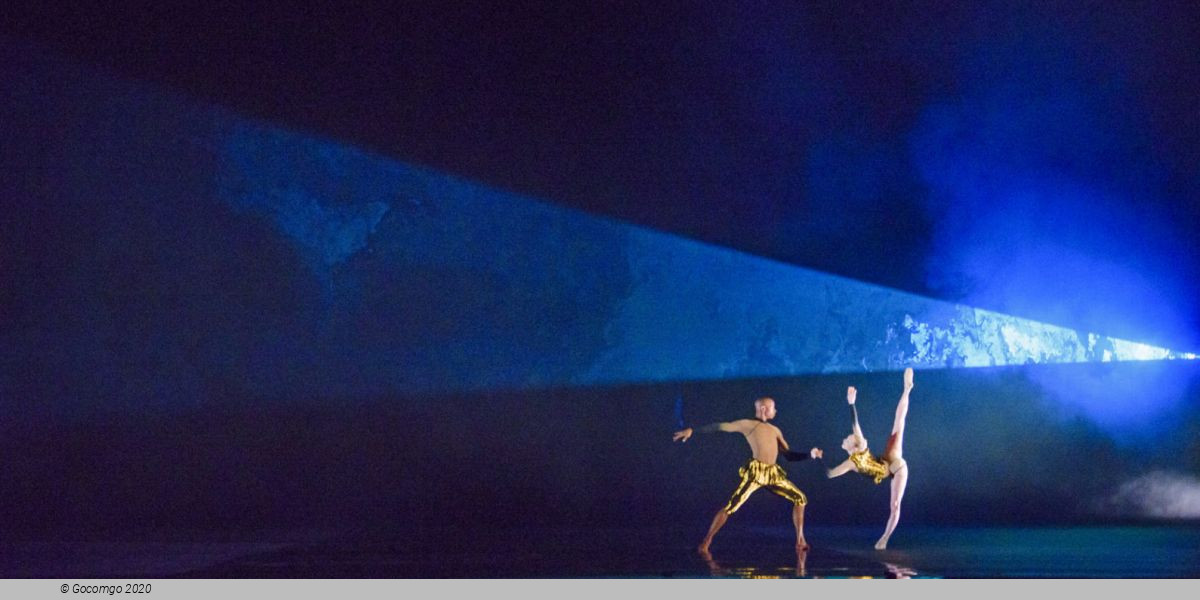
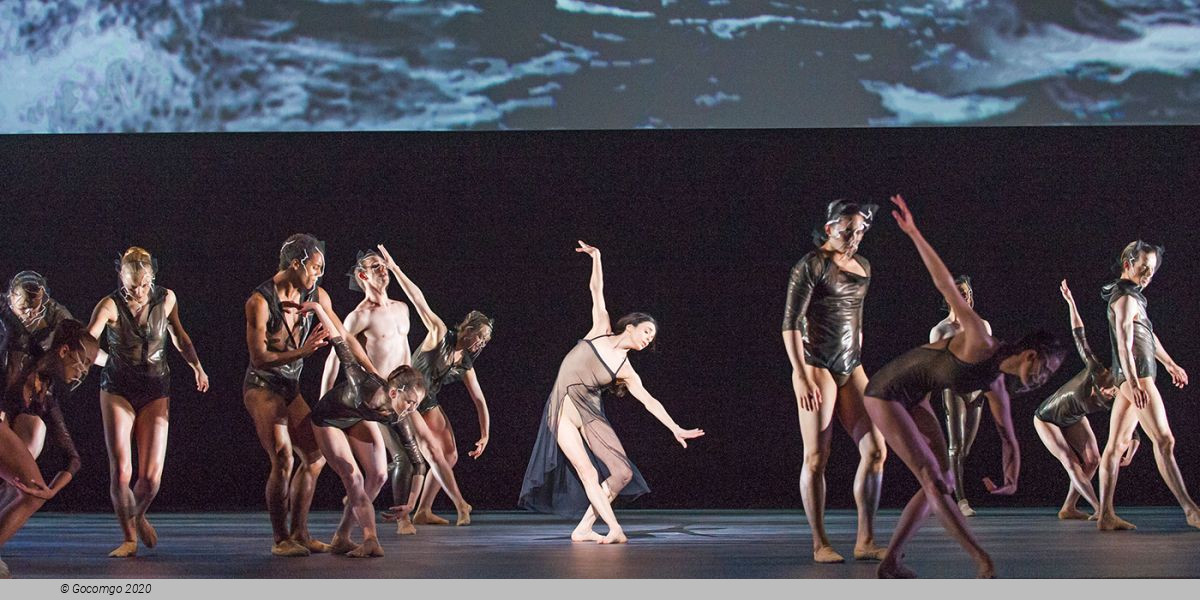
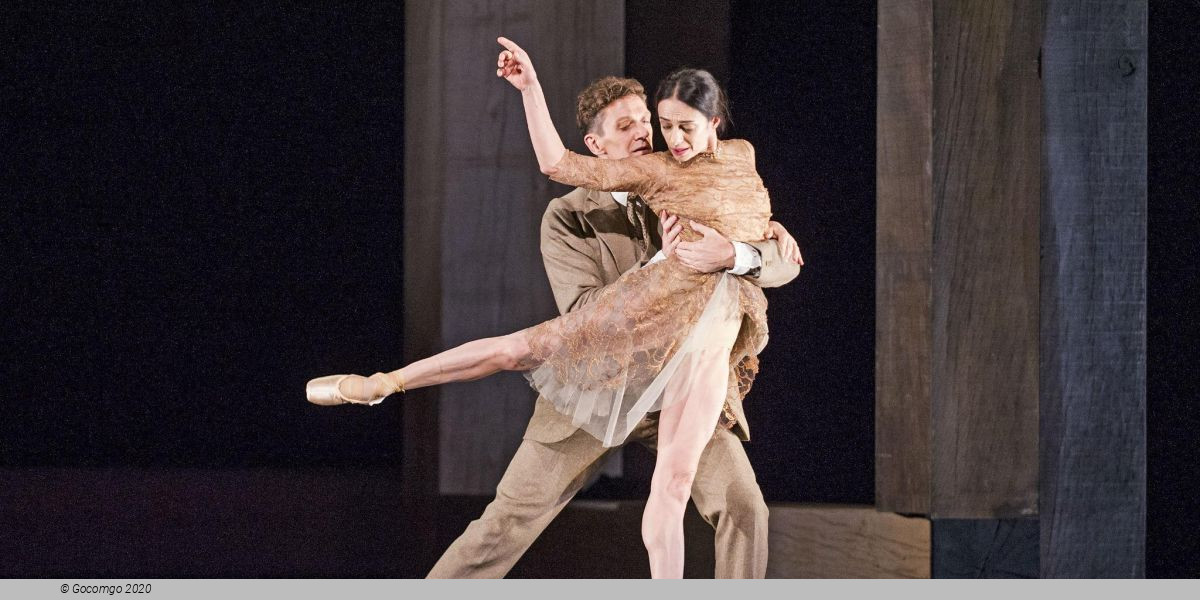
MITTSU: Virginia Woolf is a new full-length ballet evening by Hamburg Ballet, bringing together three generations of female choreographers: Neshama Nashman, Yuka Oishi and Kristina Paulin. Inspired by the life and work of Virginia Woolf and other pioneering women artists of the modern era, the production explores creativity, identity and the inner lives of women through three original choreographic works, accompanied by the Philharmonic State Orchestra Hamburg.

With MITTSU: Virginia Woolf, Hamburg Ballet introduces a new choreographic format built around collaboration between artists of different generations. The title Mittsu, Japanese for the number three when counting people or objects, reflects the meeting of three distinct artistic voices: Neshama Nashman, Yuka Oishi and Kristina Paulin.

Commissioned by Hamburg Ballet’s Artistic Director Lloyd Riggins, the evening features three world premieres inspired by Virginia Woolf, the influential modernist writer and early feminist, alongside other pioneering women artists of the modern era. Rather than retelling a single biography, the production draws inspiration from their creative legacies and the ways in which women have challenged conventions, explored identity and transformed artistic expression.

Each choreographer brings an individual perspective and movement language to the stage. Through their collaborative approach, the three works create a dialogue across generations, exploring the relationship between artistic freedom, personal experience and the changing role of women in modern culture.

The performance features the Philharmonic State Orchestra Hamburg under the musical direction of Henrik Vagn Christensen. Combining contemporary choreography with the expressive possibilities of live orchestral music, MITTSU: Virginia Woolf offers a distinctive encounter with the past and present of women’s creativity.

Premiering on 13 March 2027 at the Hamburg State Opera as part of the 52nd Hamburg Ballet Days, MITTSU marks a new chapter in the company’s commitment to artistic innovation and collaboration.

Synopsis

MITTSU: Virginia Woolf brings together three original choreographic works inspired by Virginia Woolf and other pioneering women artists of the modern era.

Through three distinct choreographic perspectives, the evening explores the inner worlds of women, the search for individual identity and the transformative power of artistic expression. The works reflect on how women have questioned social expectations, challenged established conventions and created new ways of seeing the world.

Rather than following one continuous storyline, the ballet evening unfolds as a series of artistic interpretations, connected by shared themes of creativity, independence and self-discovery. The collaboration between Neshama Nashman, Yuka Oishi and Kristina Paulin creates a conversation across generations, celebrating the diversity of female experience and the enduring influence of women who have reshaped modern culture.

Venue Info

Staatsoper Hamburg - Hamburg
Location   Große Theaterstraße 25

Staatsoper Hamburg is the oldest publicly accessible musical theater in Germany, located in Hamburg. It was founded in 1678. With the emergence of the Hamburg Opera House, researchers attribute the formation of a national German opera school.

Opera in Hamburg dates to 2 January 1678 when the Oper am Gänsemarkt was inaugurated with a performance of a biblical Singspiel by Johann Theile. It was not a court theatre but the first public opera house in Germany established by the art-loving citizens of Hamburg, a prosperous member of the Hanseatic League.

The Hamburg Bürgeroper resisted the dominance of the Italianate style and rapidly became the leading musical center of the German Baroque. In 1703, George Friedrich Handel was engaged as violinist and harpsichordist and performances of his operas were not long in appearing. In 1705, Hamburg gave the world première of his opera Nero.

In 1721, Georg Philipp Telemann, a central figure of the German Baroque, joined the Hamburg Opera, and in subsequent years Christoph Willibald Gluck, Johann Adolph Hasse and various Italian companies were among the guests.

To replace the aging wooden structure, the first stone was laid on 18 May 1826 for the Stadt-Theater on the present-day site of the Staatsoper Hamburg. The new theater, with seating for 2,800 guest, was inaugurated less than a year later with Beethoven's incidental music to Egmont.

In 1873, both the exterior and interior of the structure were renovated in the reigning "Gründerzeit" style of the time, and again in 1891, when electric lighting was introduced.

Under the direction of Bernhard Pollini, the house mounted its first complete Ring Cycle in 1879. In 1883, the year of Wagner's death, a cycle comprising nine of his operas commenced. The musical directors Hans von Bülow (from 1887 to 1890) and Gustav Mahler (from 1891 to 1897) also contributed to the fame of the opera house.

In the beginning of the 20th century, opera was an important part of the theatre's repertoire; among the 321 performances during the 1907–08 season, 282 were performances of opera. The Stadt-Theater performed not only established repertoire but also new works, such as Paul Hindemith's Sancta Susanna, Igor Stravinsky's The Soldier's Tale, Ernst Krenek's Jonny spielt auf, and Leoš Janáček's Jenůfa. Ferruccio Busoni's Die Brautwahl (1912) and Erich Wolfgang Korngold's Die tote Stadt (1920) both had their world premieres in Hamburg. In the 1930s, after Hitler came to power, the opera house was renamed Hamburgische Staatsoper.

On the night of 2 August 1943, both the auditorium and its neighbouring buildings were destroyed during air raids by fire-bombing; a low-flying airplane dropped several petrol and phosphorus containers onto the middle of the roof of the auditorium, causing it to erupt into a conflagration.

The current Staatsoper opened on 15 October 1955 with Mozart's Die Zauberflöte. Hamburg continued to devote itself to new works, such as Hans Werner Henze's The Prince of Homburg (1960), Stravinsky's The Flood (1963), Gian Carlo Menotti's Help, Help, the Globolinks! (1968), and Mauricio Kagel's Staatstheater (1971).

In 1967, under the direction of Joachim Hess, the Staatsoper Hamburg became the first company to broadcasts its operas in color on television, beginning with Die Hochzeit des Figaro (a German translation of Le Nozze di Figaro). Ten of these television productions have been released on DVD by ArtHaus Musik as Cult Opera of the 1970s, as well as separately. All of these were performed in German regardless of the original language (six were written in German, one in French, two in English, and one in Italian).

More recently, Hamburg gave the world premières of Wolfgang Rihm's Die Eroberung von Mexico (1992) and Helmut Lachenmann's Das Mädchen mit den Schwefelhölzern (1997), for which it received much international acclaim. The company has won the "Opera House of the Year" award by the German magazine Opernwelt in 1997 and in 2005.

Important Info
Type: Modern Ballet
City: Hamburg, Germany
Starts at: 18:00
Top of page