Liverpool Empire Theatre tickets 6 July 2027 - Hadestown | GoComGo.com

Hadestown

Liverpool Empire Theatre, Liverpool, Great Britain
All photos (7)
Select date and time
7:30 PM
From
US$ 110

E-tickets: Print at home or at the box office of the event if so specified. You will find more information in your booking confirmation email.

You can only select the category, and not the exact seats.
If you order 2 or 3 tickets: your seats will be next to each other.
If you order 4 or more tickets: your seats will be next to each other, or, if this is not possible, we will provide a combination of groups of seats (at least in pairs, for example 2+2 or 2+3).

Important Info
Type: Musical
City: Liverpool, Great Britain
Starts at: 19:30

E-tickets: Print at home or at the box office of the event if so specified. You will find more information in your booking confirmation email.

You can only select the category, and not the exact seats.
If you order 2 or 3 tickets: your seats will be next to each other.
If you order 4 or more tickets: your seats will be next to each other, or, if this is not possible, we will provide a combination of groups of seats (at least in pairs, for example 2+2 or 2+3).

Overview

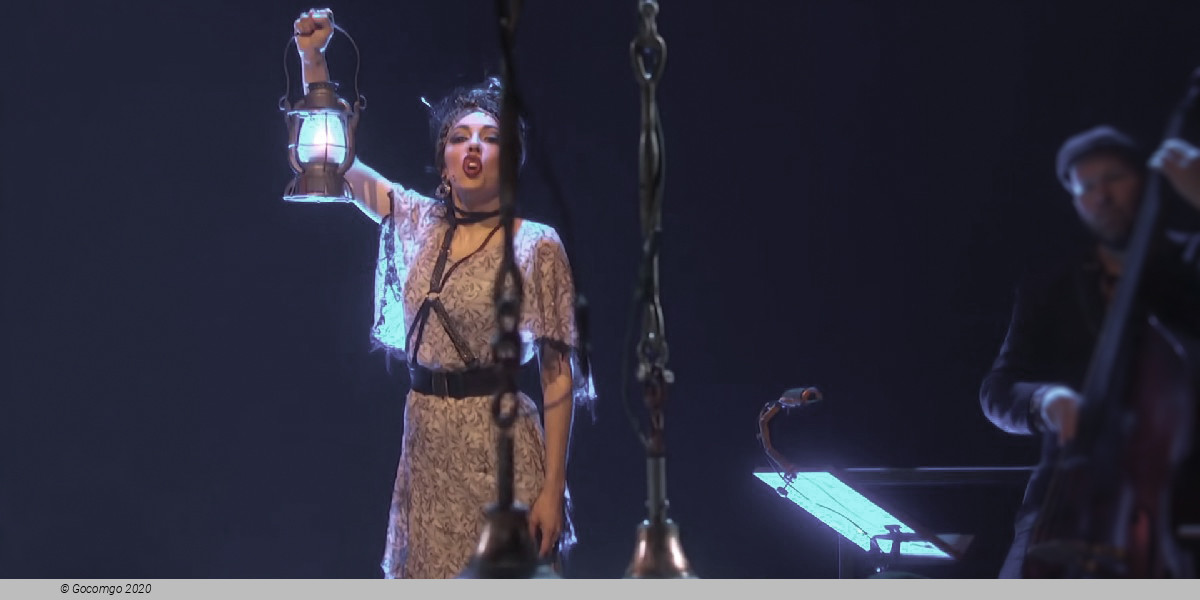
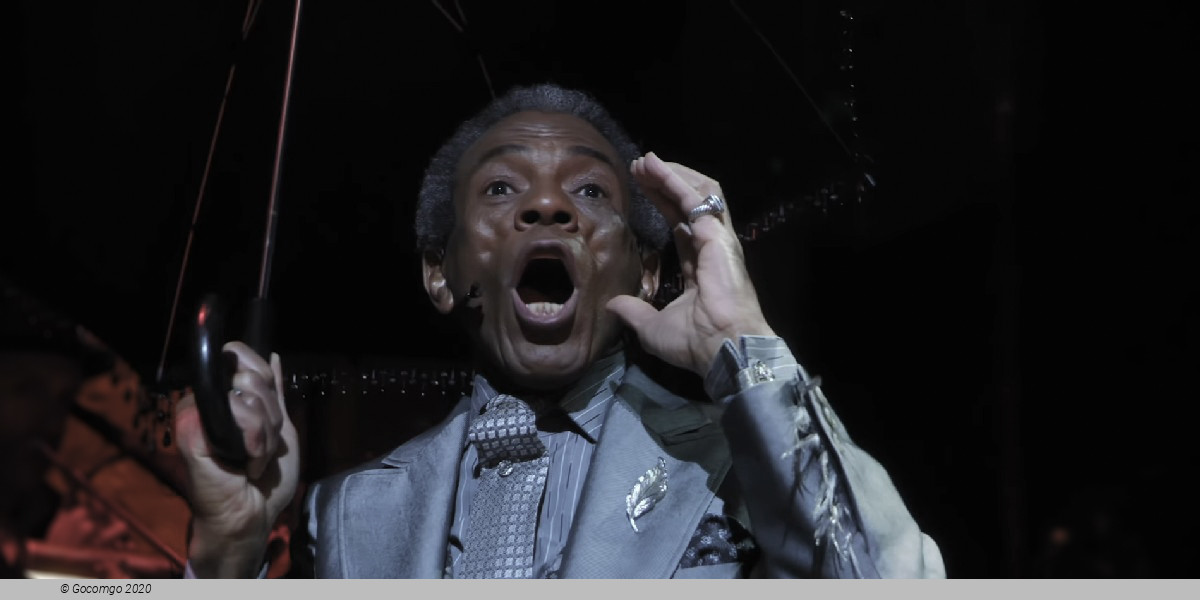
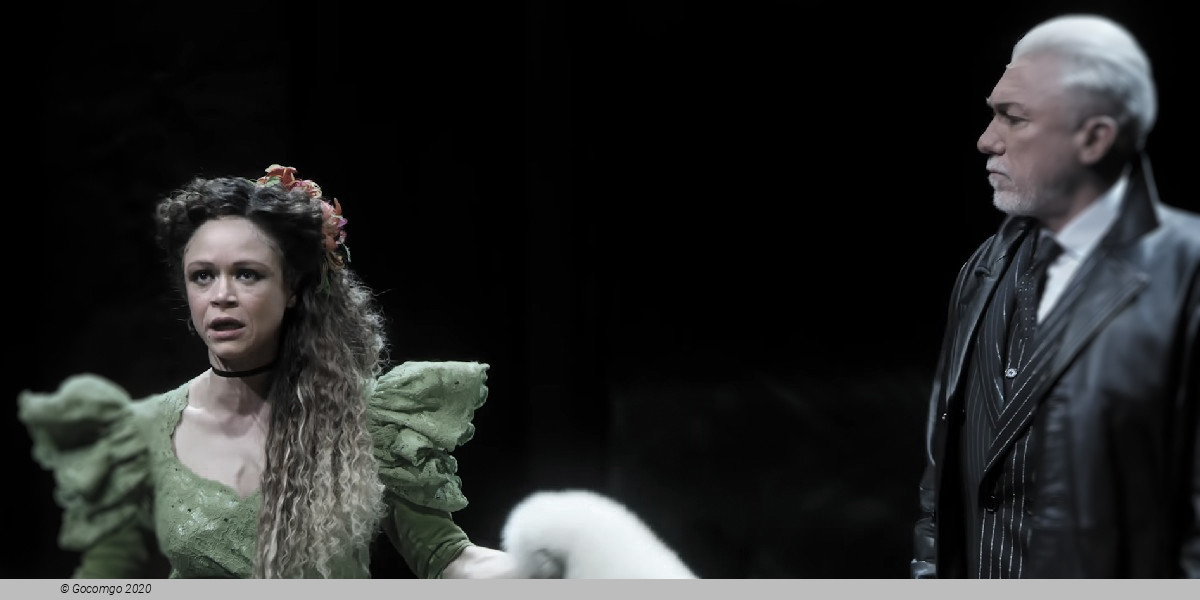
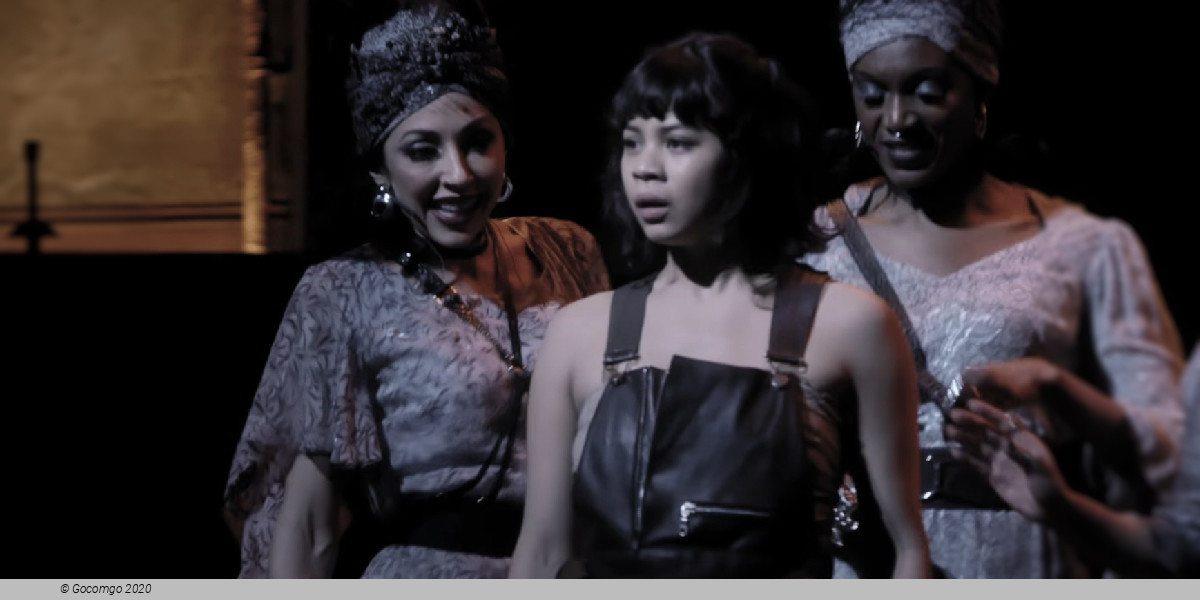
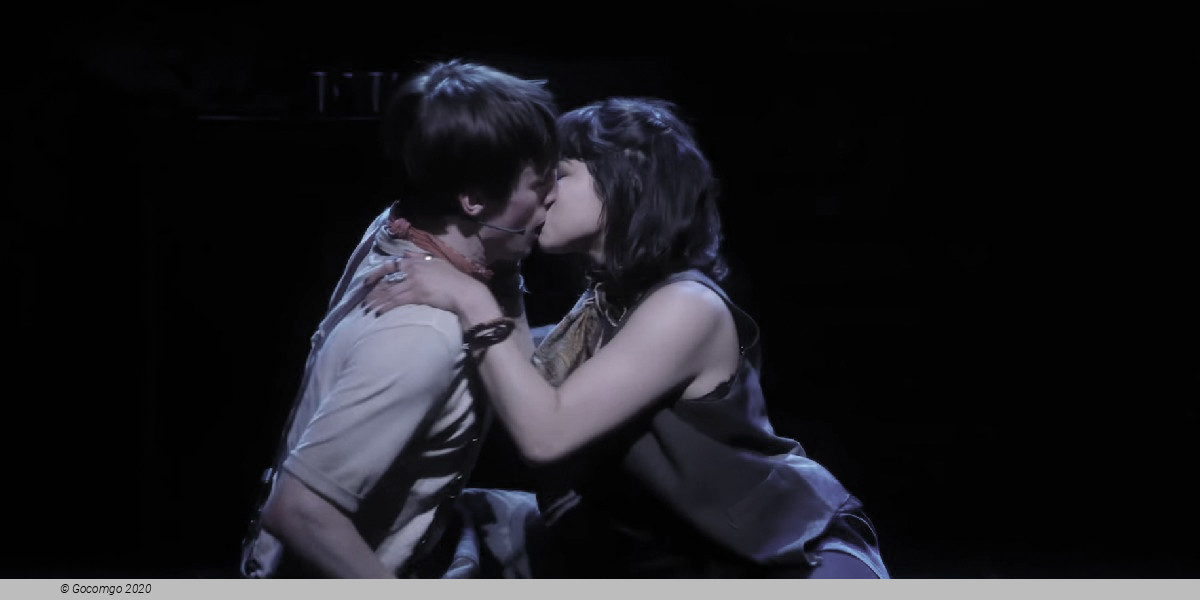
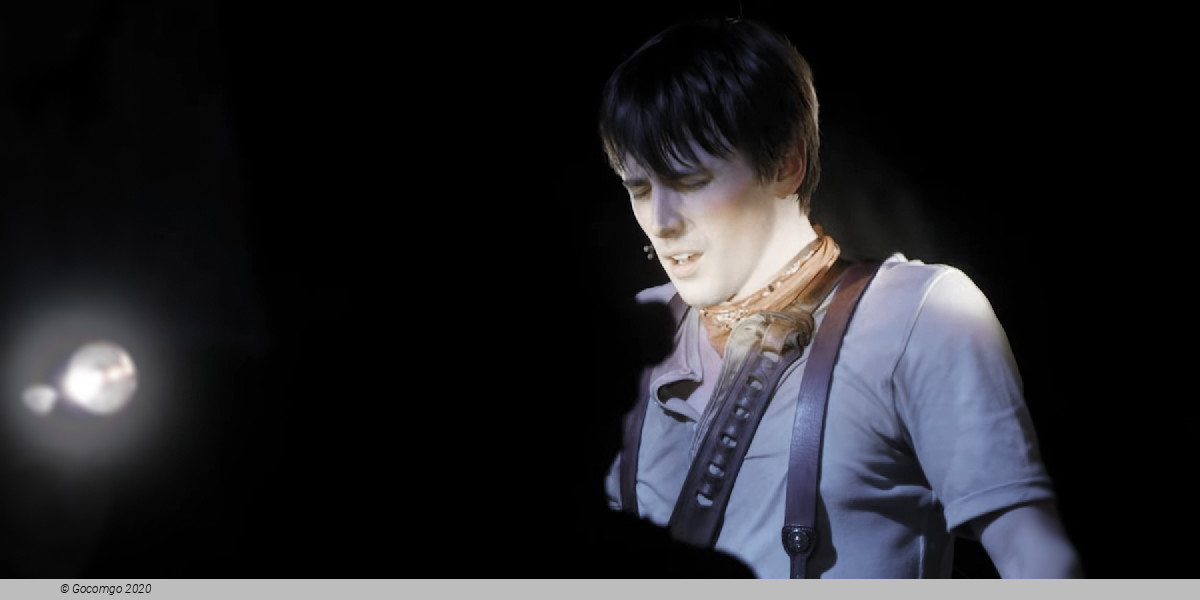
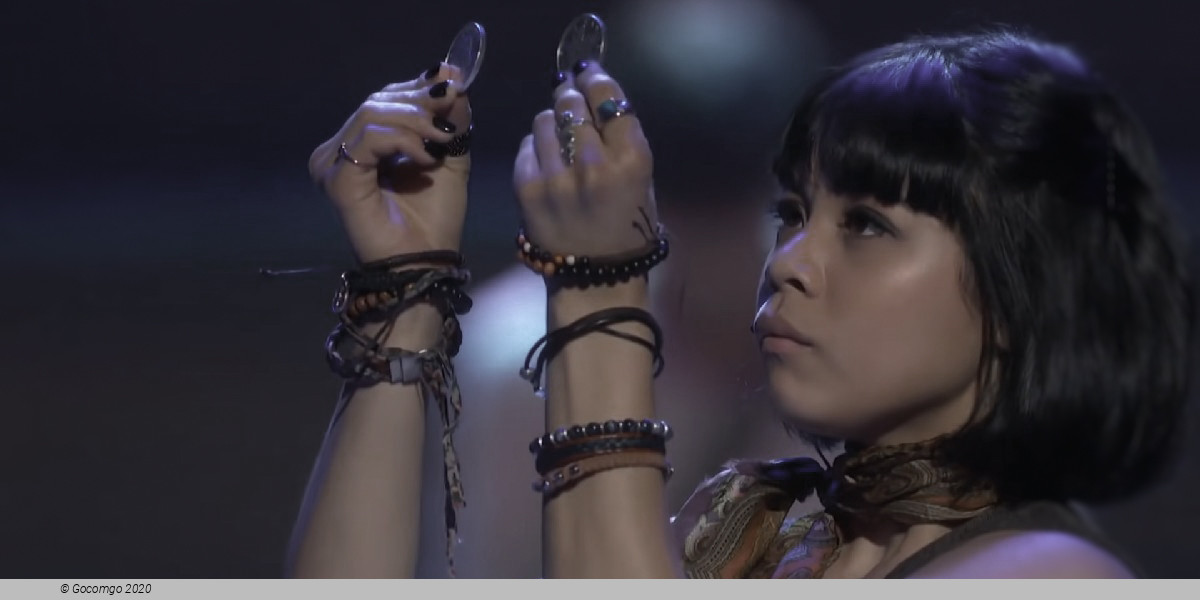
Welcome to Hadestown, where a song can change your fate.  The acclaimed Broadway musical phenomenon by singer-songwriter Anaïs Mitchell and director Rachel Chavkin, is now playing at the Lyric Theatre.  ‘An epic celebration of music, togetherness and hope’ (Forbes), Hadestown is the winner of 8 Tony Awards® including Best Musical and the Grammy Award® for Best Musical Theatre Album.  Take an unforgettable journey to the underworld and back, intertwining two mythic love stories – that of young dreamers Orpheus and Eurydice, and that of King Hades and his wife Persephone.  A deeply resonant and defiantly hopeful theatrical experience, the show invites you to imagine how the world could be.

History
Premiere of this production: 30 November 2005, Barre, Vermont, USA

Hadestown is a musical with music, lyrics and book by Anaïs Mitchell. It tells a version of the ancient Greek myth of Orpheus and Eurydice, where Orpheus goes to the underworld to rescue his lover, Eurydice.

Synopsis

Act I

The story begins with the Greek God, Hermes, introducing the characters (“Road to Hell”). This is followed by the Fates and Eurydice describing the harsh weather and famine of the setting (“Any Way the Wind Blows”). Orpheus, Hermes’s ward, introduces himself to Eurydice and asks her to marry him (“Come Home With Me”). Eurydice, however, is doubtful, since they both live in poverty. Orpheus tells her that he is writing a song to make spring come again, and they will no longer have to struggle (“Wedding Song”)

Orpheus sings the story of Hades and Persephone (“Epic I”). Persephone arrives in the world above and celebrates summertime (“Livin’ it up on Top”), while Eurydice truly begins to fall in love with Orpheus (“All I’ve Ever Known.”). Hades comes early to collect Persephone, and she voices her misery of having to return to Hadestown, Hades’ underground factory. Despite hearing about the never-ending labor endured by the factory workers, Eurydice is intrigued by the rich praises sung by the Fates as well as the promise of protection that Hadestown offers (“Way Down Hadestown”). Without Persephone, the long winter returns and Eurydice searches for food and firewood, urging Orpheus to finish his song (“A Gathering Storm”). Orpheus continues working on his song (“Epic II”), while Persephone and Hades argue (“Chant”).

Hades leaves his factory to find someone who will appreciate its safety and security. He comes across a desperate Eurydice, and invites her to come to Hadestown (“Hey, Little Songbird”). The Fates appear and urge Eurydice to join him (“When the Chips are Down”). With the cold surging on, and Orpheus’s song remaining uncompleted, Eurydice sees no other option except to follow Hades. She sings her goodbyes to Orpheus before disappearing. (“Gone, I’m Gone”). Orpheus discovers Eurydice’s disappearance, and becomes determined to rescue her from Hadestown. He sets off on his journey using Hermes’ instructions on how to get there without the use of Hades’ train (“Wait for Me”). Eurydice arrives in Hadestown and signs the contract, officially becoming a worker. (“Why We Build the Wall”).

Act II

An entr'acte reveals that Persephone is bypassing Hades’ laws by selling wind, rain, and sunshine to the workers (“Our Lady of the Underground"). Eurydice begins to realize the consequences of her choice to go to Hadestown: she will soon become a mindless laborer and can never leave unless Hades consents to let her go (“Way Down Hadestown (Reprise)"). She sings of her regrets as her memories of the world above slowly begin to fade (“Flowers”).

Orpheus arrives in Hadestown, and promises Eurydice that he will take her home with him. While Eurydice is relieved, she explains to Orpheus that she is not able to leave (“Come Home with Me (Reprise)"). Orpheus does not understand, until Hades appears and reveals to him that Eurydice willingly signed the contract (“Papers”). The workers then attack Orpheus and the Fates tell him to give up hope (“Nothing Changes”). Despite almost giving up, Orpheus vows to find a way to free Eurydice, rallying up the workers and opening their eyes to the true horrors of Hadestown (“If It’s True”).

Persephone is inspired by Orpheus’ determination and urges Hades to let Eurydice go (“How Long”). While the workers begin to truly question the amount of freedom they have, Hades bitterly offers Orpheus a chance to sing his completed song, threatening to kill him afterwards (“Chant (Reprise)"). Orpheus sings his song, reminding Hades of his love for Persephone (“Epic III”). The two gods reconcile through a dance, after which Orpheus and Eurydice promise to stay together no matter how hard (“Promises”). Orpheus asks Hades if they may leave, and Hades tells him that he has not reached a decision. The Fates taunt him for his dilemma: If he kills Orpheus and keeps Eurydice captive, they become martyrs, but if he lets them go, he loses control over his workers as they have begun to agitate for their freedom (“Word to the Wise”). Hades decides to let them go on one condition: Orpheus must lead them out. If he turns to confirm that Eurydice is following him, she will be condemned to stay in his factory forever (“His Kiss, the Riot”).

Hermes explains the condition to Orpheus and Eurydice, and they begin heading out with the workers looking to them for hope, while Persephone and Hades decide to give their relationship another chance (“Wait for Me (Reprise)"). Orpheus makes it up to the end, where he is overcome by doubt and turns around, sending Eurydice back to Hadestown (“Doubt Comes In”). Hermes reflects on the somber tale and why it must be told. (“Road to Hell (Reprise)"). After the bows at curtain call, the cast raises a cup to honor Orpheus (“We Raise Our Cups”).

Venue Info

Liverpool Empire Theatre - Liverpool
Location   Lime St

Liverpool Empire Theatre is a theatre located on the corner of Lime Street and London Road in Liverpool, Merseyside, England, United Kingdom. The playhouse, which opened in 1925, is the second one to be built on the site. It has the largest two-tier auditorium in Britain and can seat 2,348 people. During its time it has hosted many types of entertainment, including variety shows, musicals, operas, pop concerts, and plays. The Beatles appeared in the theatre in their early days. The theatre has hosted two Royal Command Performances and in 2007, a Royal Variety Performance to mark Liverpool's being designated a European City of Culture the following year. It is sited in the William Brown Street Conservation Area.

History

The site's first theatre, which was at that time was Liverpool's largest, was named the "New Prince of Wales Theatre and Opera House" opened on 15 October 1866. On 29 July 1867, its name was changed to the "Royal Alexandra Theatre and Opera House" in honour of Princess Alexandra, Princess of Wales. In 1894, the playhouse closed but was re-opened the following year under the ownership of Empire Theatre (Liverpool) Ltd. In 1896 the theatre was sold to Messrs. Moss and Thornton for £30,000 (equivalent to £3,500,000 in 2019), and renamed "The Empire". It closed for the final time on 16 February 1924 and was demolished.

The current Liverpool Empire Theatre opened on 9 March 1925. In 1977 the theatre was still owned by Moss Empires, who were making plans to dispose of it. Two years later it was acquired by Merseyside County Council. During the following two years, a total of £680,000 was spent on improving the backstage facilities and extending the stage and orchestra pit. The theatre underwent a further major refurbishment in 1999; this included increasing the size of the stage and improving the facilities for the audience. By 2002 the theatre was owned by Clear Channel Entertainment. In that year an extension was built on the north side of the building.

Architecture

Exterior

The theatre was designed by W. and T. R. Milburn for Moss Empires; the carving and the ornamentation in the auditorium were carried out by E. O. Griffiths. The building is constructed on a steel frame, with a Portland stone façade and brick elsewhere. The architectural style of the façade is free Neoclassical. The front of the theatre is in five bays, the central three of which have an attic rising above the two lateral bays. The ground floor of the central bays contains the entrance doors and over them is a steel canopy decorated with medallions and guilloché bands. The storey above ground level contains the balcony, with single and paired Ionic columns, between which are recessed windows. Over this is a dentilled cornice and the attic. On the first floor of the side bays, there are windows in architraves that are flanked by shallow pilasters above which is a plain parapet.

Interior

The entrance foyer is on the ground level, with stairs to the balcony on both sides of the foyer. The seats are raked both to the sides and to the rear in order to improve the lines of sight. The internal decoration is in Louis XVI style. It contains "many curious decorative features including carved elephant caryatids".

Conservation

The theatre was listed in the National Heritage List for England as a Grade II listed building on 16 October 1990. When it was opened its design was considered advanced, owing to the raked seating layout. There are 2,350 seats, Britain's largest two-tier auditorium. It is sited in the William Brown Street Conservation Area.

Past performances

Performers in the original theatre included George Formby Sr., Harry Tate, Dan Leno, Florrie Forde, The Two Bobs, and Wilson, Keppel and Betty. The first production in the present theatre was Better Days, starring Stanley Lupino, Maisie Gay and Ruth French. Subsequent performers have included Frank Sinatra, Judy Garland, Bing Crosby, Mae West, Laurel and Hardy, Roy Rogers and Trigger, Charlton Heston, Sarah Bernhardt, Henry Irving, Vesta Tilley, and Arthur Askey. More recent artists include Johnny Mathis, The Carpenters, Neil Sedaka, The Osmonds, Tommy Steel, Adam Faith, Bruce Forsyth, Victoria Wood, Morecambe and Wise, Ken Dodd, Shirley Bassey, Kylie Minogue, Kate Bush, Elton John, Cilla Black, AC/DC, Aerosmith, Chuck Berry, Black Sabbath, Lynyrd Skynyrd, Queen, Santana, Iron Maiden, Genesis, Steve Hillage, Steve Harley and Cockney Rebel (the band's 1976 concert at the theatre is frequently alluded to by Steve Harley when he plays concerts in the North of England, since, during the extended instrumental in his song 'Death Trip' (track 10 of 1973's 'The Human Menagerie' album), he fell off the stage and into the orchestra pit, but continued performing as though nothing had happened, despite breaking 3 ribs and as a result having to cancel the rest of the tour). The Shadows (1989). In 1957 a local pop group called The Quarrymen appeared at the theatre. They returned in 1959, having changed their name to "Johnny and the Moondogs". They returned to the Empire again in 1962, now named The Beatles. The Beatles played the Empire for the last time on 5 December 1965. During the 1970s two Royal Command Performances were held in the Empire, and in 2007 the theatre was the venue for the Royal Variety Performance in recognition of Liverpool being made the European Capital of Culture for the following year.

Present day

The Empire Theatre continues to stage productions in various genres, including musicals, pop concerts, comedians, plays, opera, and wrestling. The theatre is reputed to be haunted by at least two ghosts, one a former painter at the theatre called Len, the other a girl aged about nine or ten in Victorian dress. As of 2011, the Empire is part of the Ambassador Theatre Group (ATG).

Each year a musical is produced at the theatre performed by participants in Stage Experience, a two-week summer school in which local youngsters take part in performing a full-scale musical with a professional team. This began in 2007 with Summer Holiday, followed by The Wiz in 2008, Bugsy Malone in 2009, Fame in 2010, West Side Story in 2011, Annie in 2012, Grease in 2013, Cats in 2014, and Rent in 2017.

Important Info
Type: Musical
City: Liverpool, Great Britain
Starts at: 19:30
Top of page