
Beijing National Grand Theater (NCPA) tickets 12 November 2026 - The Mariinsky Ballet The Sleeping Beauty | GoComGo.com

The Mariinsky Ballet The Sleeping Beauty

Beijing National Grand Theater (NCPA), Opera House, Beijing, China
All photos (9)
Select date and time
7 PM

E-tickets: Print at home or at the box office of the event if so specified. You will find more information in your booking confirmation email.

You can only select the category, and not the exact seats.
If you order 2 or 3 tickets: your seats will be next to each other.
If you order 4 or more tickets: your seats will be next to each other, or, if this is not possible, we will provide a combination of groups of seats (at least in pairs, for example 2+2 or 2+3).

Important Info
Type: Ballet
City: Beijing, China
Starts at: 19:00
Duration: 2h 30min

E-tickets: Print at home or at the box office of the event if so specified. You will find more information in your booking confirmation email.

You can only select the category, and not the exact seats.
If you order 2 or 3 tickets: your seats will be next to each other.
If you order 4 or more tickets: your seats will be next to each other, or, if this is not possible, we will provide a combination of groups of seats (at least in pairs, for example 2+2 or 2+3).

Cast
Performers
Ballet company: Mariinsky Ballet
Creators
Director: Valery Gergiev
Composer: Pyotr Tchaikovsky
Choreographer: Konstantin Sergeev
Author: Charles Perrault
Librettist: Ivan Vsevolozhsky
Librettist: Marius Petipa
Choreography: Marius Petipa
Overview

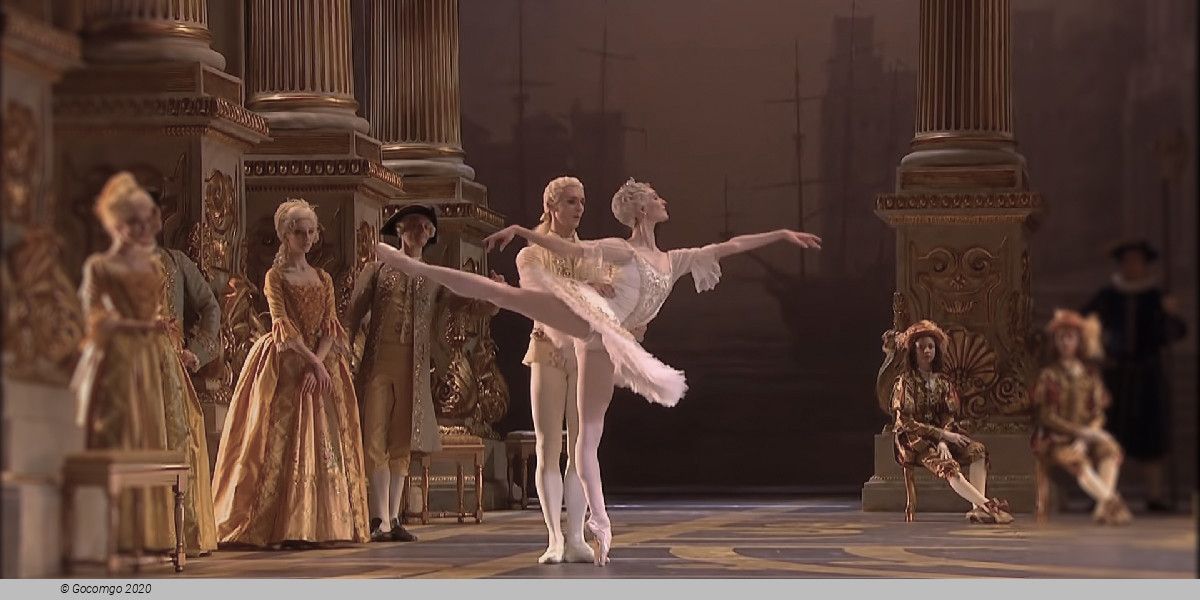
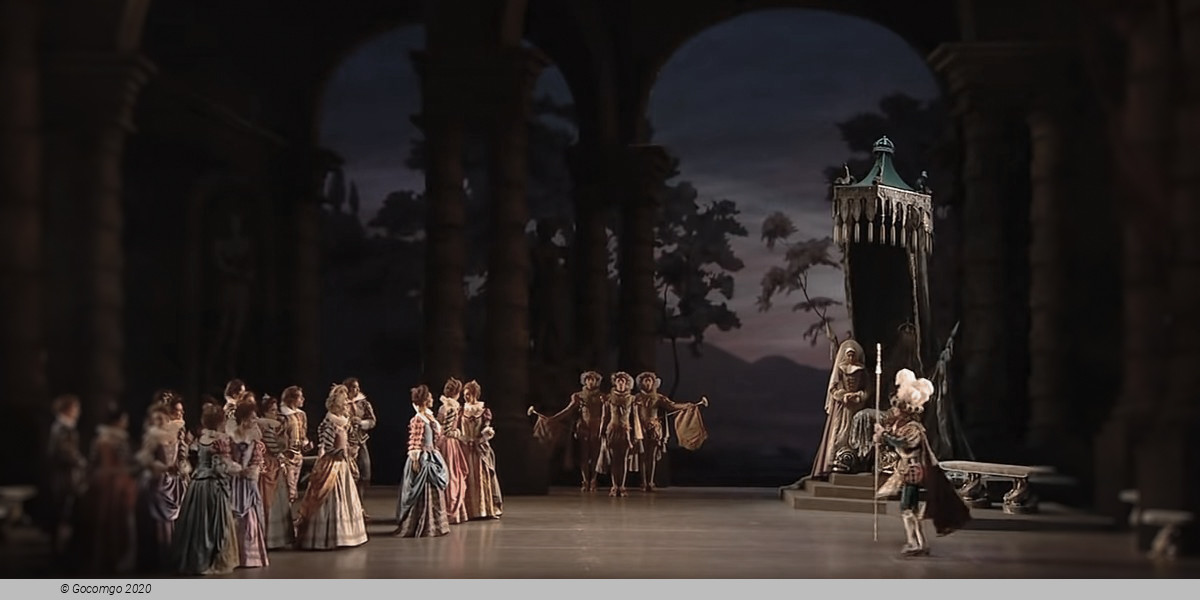
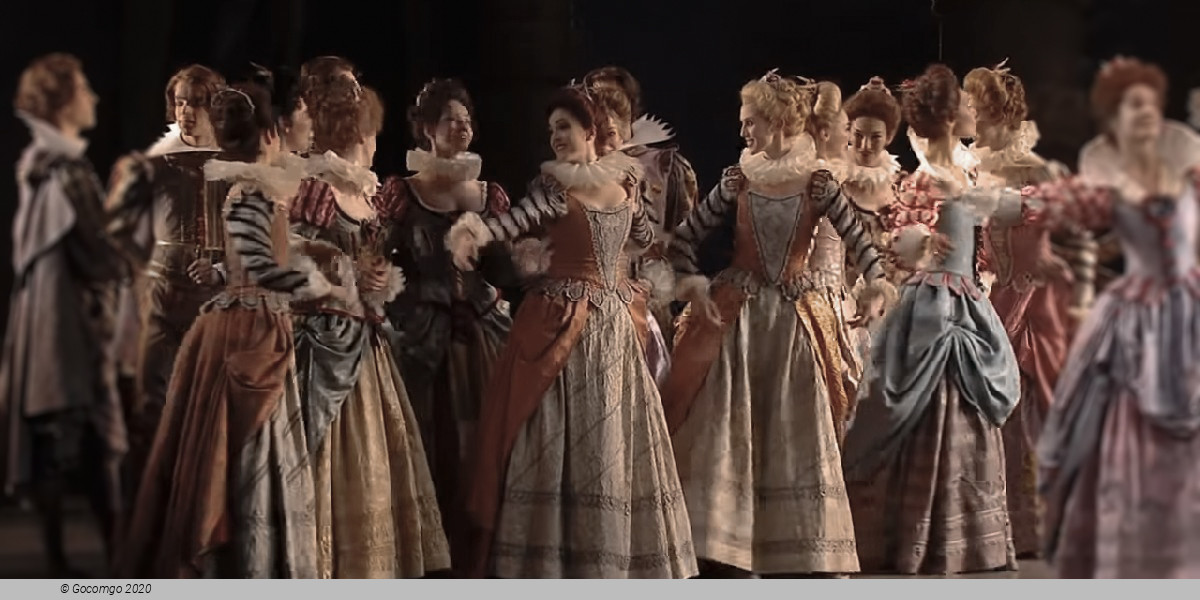
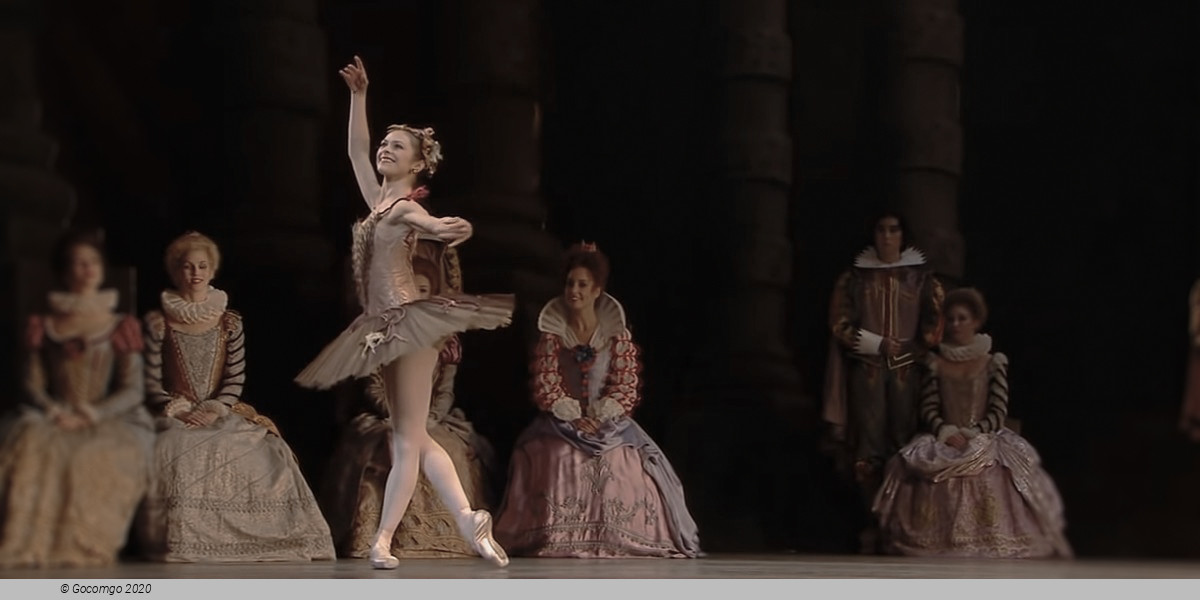
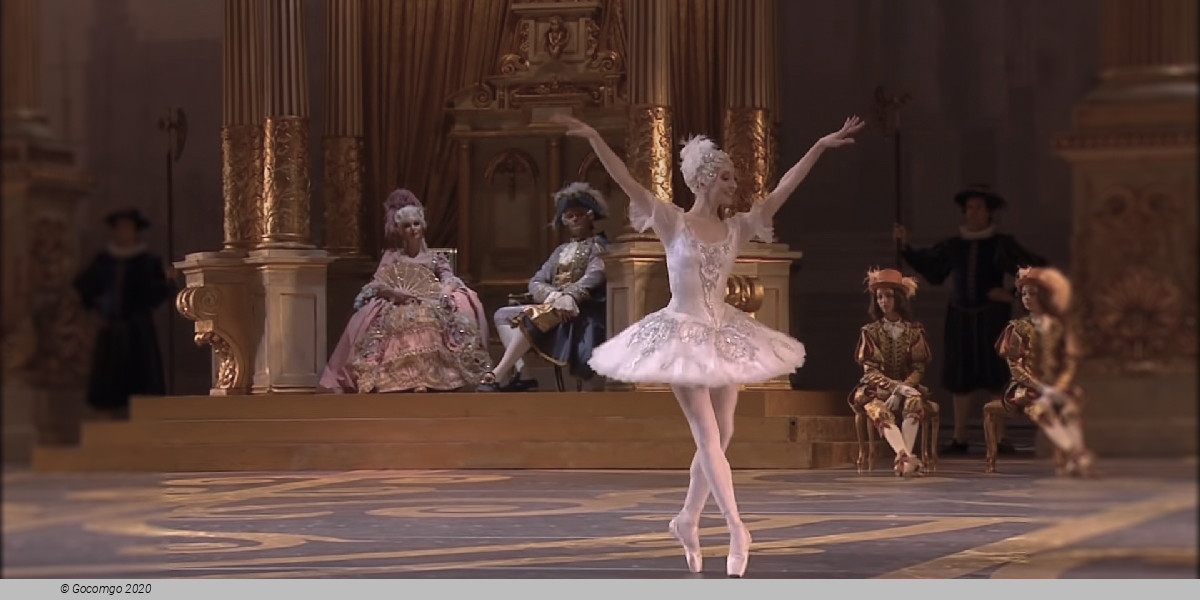
The Mariinsky Ballet presents Pyotr Tchaikovsky’s The Sleeping Beauty in the classical choreography of Marius Petipa, in the revised version by Konstantin Sergeev.

The Sleeping Beauty is one of the central works of the classical ballet repertoire. The production is based on the original choreography by Marius Petipa, revised by Konstantin Sergeev in 1952. The ballet tells the story of Princess Aurora, who is cursed by the evil fairy Carabosse and falls into a hundred-year sleep before being awakened by Prince Désiré. The production uses sets and costumes designed by Simon Virsaladze.

History
Premiere of this production: 03 January 1890, Mariinsky Theatre in St. Petersburg

The Sleeping Beauty is a ballet in a prologue and three acts, first performed in 1890. The music was composed by Pyotr Ilyich Tchaikovsky (his opus 66). The score was completed in 1889, and is the second of his three ballets. The original scenario was conceived by Ivan Vsevolozhsky, and is based on Charles Perrault's La Belle au bois dormant. The choreographer of the original production was Marius Petipa.

Synopsis

Time: Baroque
Place: Europe

Prologue (The Christening)

King Florestan XXIV and his Queen have welcomed their first child, Princess Aurora, and declare a grand christening ceremony to honor her. Six fairies are invited to the ceremony to bestow gifts on the child. Each fairy brings a gift of a virtue or positive trait, such as beauty, courage, sweetness, musical talent, and mischief. The most powerful fairy, the Lilac Fairy, arrives with her entourage, but before she can bestow her gift, the evil fairy Carabosse arrives with her minions. Carabosse furiously asks the King and Queen why she had not received an invitation to the christening. The blame falls on Catalabutte, the Master of Ceremonies who was in charge of the guest list. Carabosse gleefully tears his wig off and beats him with her staff, before placing a curse upon the baby princess as revenge: Aurora will indeed grow up to be a beautiful, healthy, delightful young lady, but on her sixteenth birthday she will prick her finger on a Spindle and die. The King and Queen are horrified and beg Carabosse for mercy, but she shows none. However, the Lilac Fairy intervenes. Though she does not have enough power to completely undo the curse, she alters it, allowing the spindle to cause a peaceful 100-year sleep for the princess, rather than death. At the end of those 100 years, she will be woken by the kiss of a handsome prince. Relieved that Aurora's life will ultimately be spared, the court is set at ease.

Act I (The Spell)

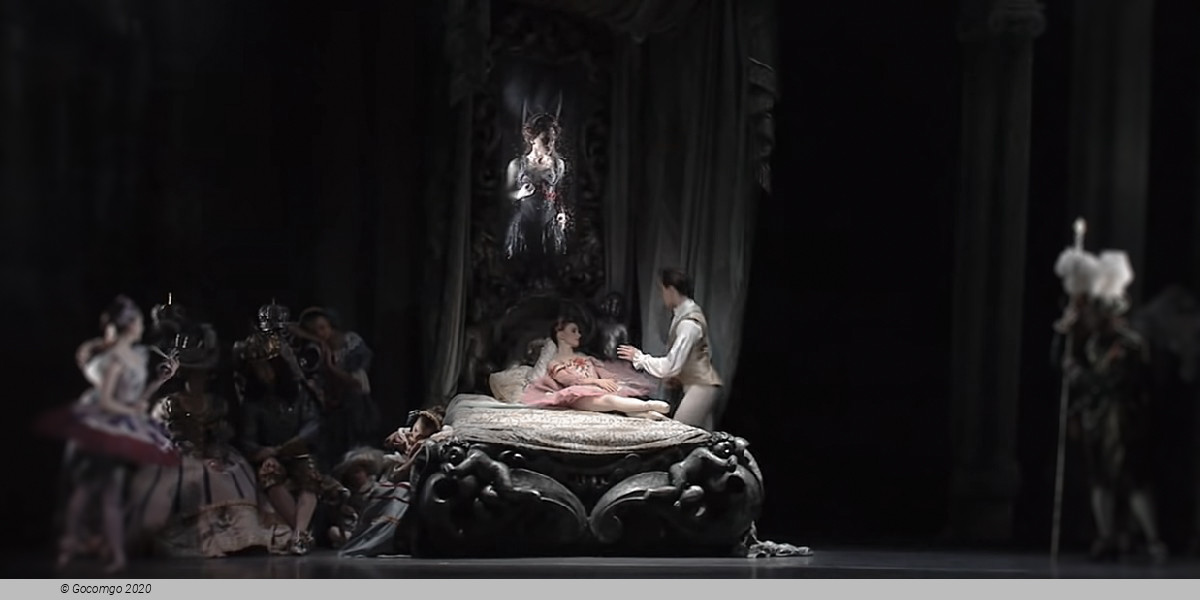
It is the day of Princess Aurora's sixteenth birthday. Celebrations are underway, though the King is still unsettled by Carabosse's omen. The master of ceremonies discovers several peasant ladies frolicking about with knitting needles and alerts the King, who initially sentences the women to a harsh punishment. The Queen gently persuades him to spare the innocent citizens, and he agrees. An elaborate waltz is performed and Princess Aurora arrives. She is introduced to four suitors by her doting parents. Aurora and the suitors perform the famous Rose Adagio. Presently, a cloaked stranger appears and offers a gift to the princess: a spindle. Having never seen one before, Aurora curiously examines the strange object as her parents desperately try to intervene. As predicted, she pricks her finger. While initially appearing to recover quickly, she falls into a swoon and collapses. The cloaked stranger reveals herself to be Carabosse, who believes that her curse still stands and that the princess is dead. Once again, the Lilac Fairy quells the hubbub and reminds the King and Queen that Aurora is merely asleep. The princess is carried off to bed, and the Lilac Fairy casts a spell of slumber over the entire kingdom, which will only be broken when Aurora awakens. A thick layer of thorny plants grows over the palace, hiding it from view.

Act II (The Vision)

One hundred years later, Prince Désiré is attending a hunting party. Though his companions are lighthearted, the prince is unhappy and eventually asks to be left alone. On his own in the forest, he is met by the Lilac Fairy, who has chosen him to awaken Aurora. She shows him a vision of the beautiful princess, and the prince is immediately smitten. The Lilac Fairy explains the situation, and Désiré begs to be taken to the princess. The Lilac Fairy takes him to the hidden castle. Carabosse makes one last attempt to cement her vengeful curse, but the Lilac Fairy and the prince manage to defeat her together at last. Once inside the castle, Désiré awakens Aurora with a kiss. The rest of the court wakes as well, and the King and Queen heartily approve when the prince proposes marriage and the princess accepts.

Act III (The Wedding)

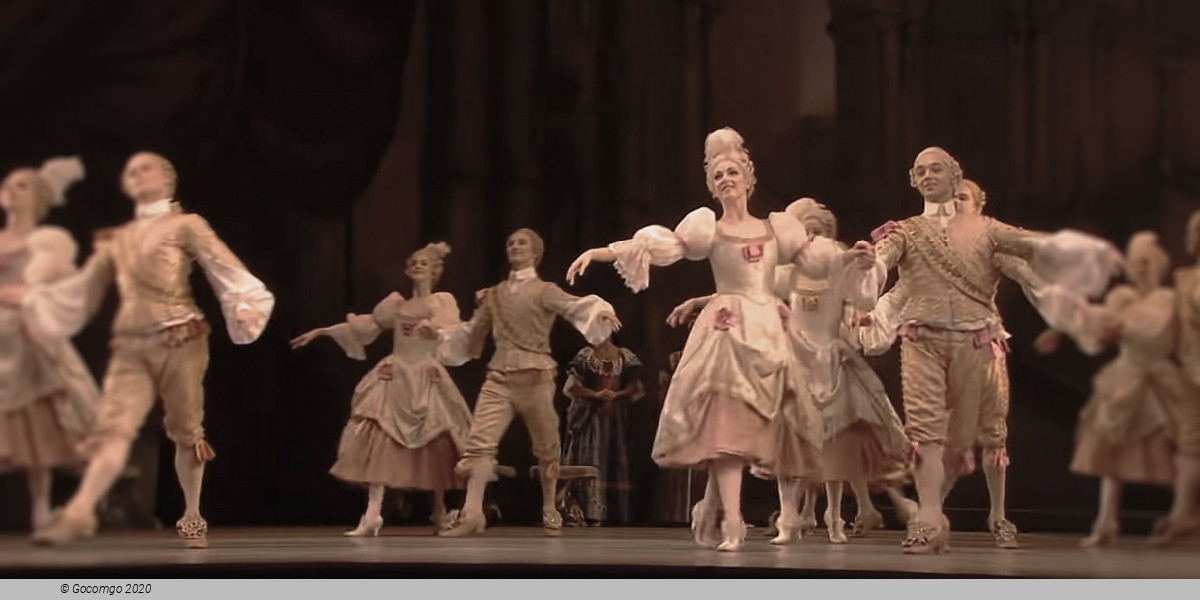
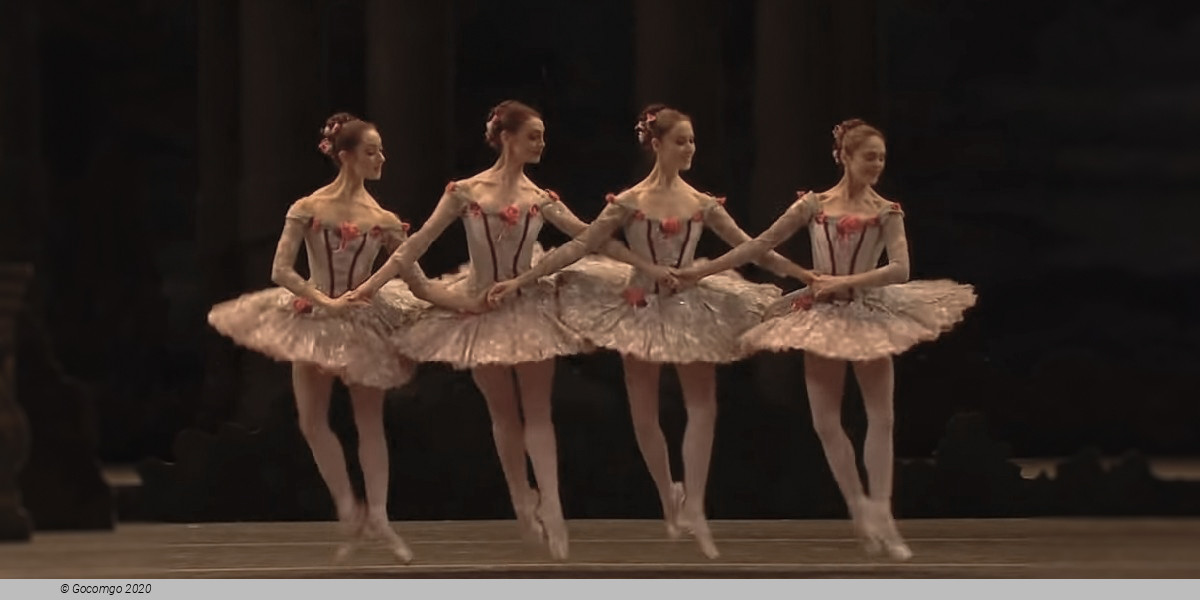
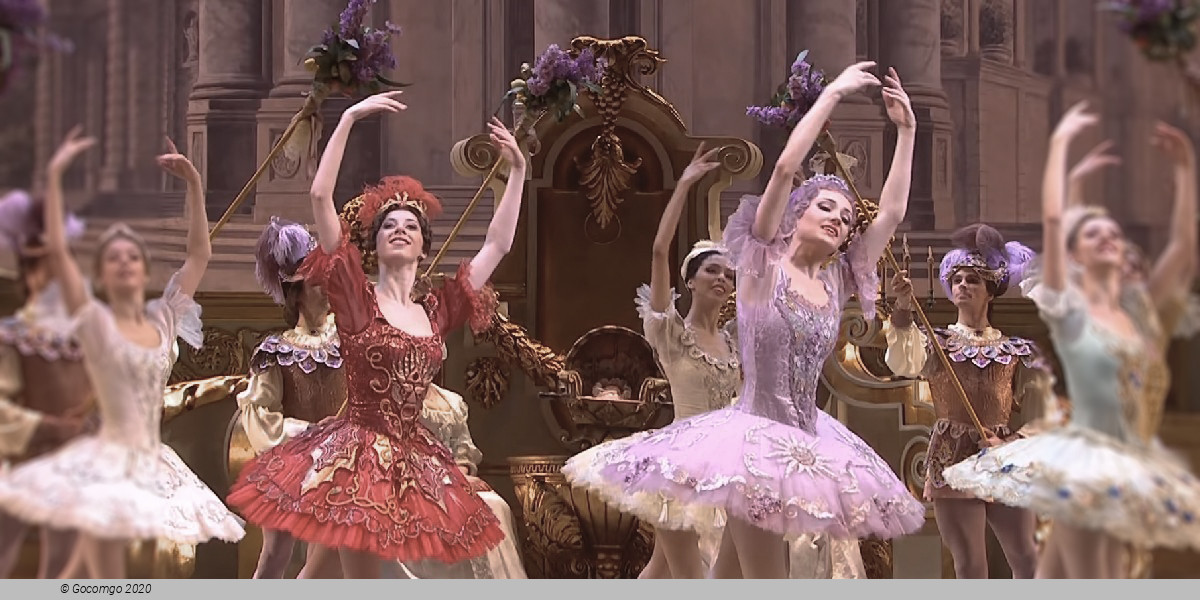
The royal wedding is underway. Guests include the Jewel Fairies: Diamond, Gold, Silver and Sapphire, and of course the Lilac Fairy. Fairytale characters are in attendance, including Puss in Boots and The White Cat, Princess Florine and the Bluebird, and others. Aurora and Désiré perform a grand Pas de Deux, and the entire ensemble dances. The prince and princess are married, with the Lilac Fairy blessing the union.

Structure

Titles of all of the numbers listed here come from Marius Petipa's original scenario, as well as the original libretto and programs of the first production of 1890. Major changes which were made to the score for Petipa's original production are mentioned, and help explain why the score is often heard in different versions in theatres today.

All libretti and programs of works performed on the stages of the Imperial Theatres were titled in French, which was the official language of the Emperor's Court, as well as the language in which balletic terminology is derived.

Prologue — Le baptême de la Princesse Aurore

Venue Info

Beijing National Grand Theater (NCPA) - Beijing
Location   2 W Chang'an Ave

The National Centre for the Performing Arts (NCPA) is an arts centre containing an opera house in Beijing, People's Republic of China. The Centre, an ellipsoid dome of titanium and glass surrounded by an artificial lake, seats 5,452 people in three halls and is almost 12,000 m² in size. It was designed by French architect Paul Andreu. Construction started in December 2001 and the inaugural concert was held in December 2007.

The exterior of the theater is a titanium-accented glass dome that is completely surrounded by a man-made lake. It is said to look like an egg floating on water, or a water drop. It was designed as an iconic feature, something that would be immediately recognizable.

The dome measures 212 meters in east–west direction, 144 meters in north–south direction, and is 46 meters high. The main entrance is at the north side. Guests arrive in the building after walking through a hallway that goes underneath the lake. The titanium shell is broken by a glass curtain in north–south direction that gradually widens from top to bottom.

The location, immediately to the west of Tiananmen Square and the Great Hall of the People, and near the Forbidden City, combined with the theatre's futuristic design, created considerable controversy. Paul Andreu countered that although there is indeed value in ancient traditional Chinese architecture, Beijing must also include modern architecture, as the capital of the country and an international city of great importance. His design, with large open space, water, trees, was specially designed to complement the red walls of ancient buildings and the Great Hall of the People, in order to melt into the surroundings as opposed to standing out against them.

Internally, there are three major performance halls:

The Opera Hall is used for operas, ballet, and dances and seats 2,416 people.
The Music Hall is used for concerts and recitals and seats 2,017 people.
The Theatre Hall is used for plays and the Beijing opera. It has 1,040 seats.
The NCPA also distributes filmed and recorded performances of its concerts, plays and operas through the in-house label NCPA Classics, established in 2016.

The initial planned cost of the theatre was 2.688 billion yuan. When the construction had completed, the total cost rose to more than CNY3.2 billion. The major cause of the cost increase was a delay for reevaluation and subsequent minor changes as a precaution after a Paris airport terminal building collapsed. The cost has been a major source of controversy because many believed that it is nearly impossible to recover the investment. When the cost is averaged out, each seat is worth about half a million CNY. The Chinese government answered that the theater is not a for profit venture.

The government sanctioned study completed in 2004 by the Research Academy of Economic & Social Development of the Dongbei University of Finance and Economics, of the upkeep costs of the building were publicized in domestic Chinese media:

The water and electricity bills and the cleaning cost for the external surface would be at least tens of millions CNY, and with another maintenance cost, the total could easily exceed one billion CNY. Therefore, at least 80 percent of the annual operational costs must be subsidized by the government for at least the first three years after the opening, and for the rest of its operational life, at least 60 percent of the annual operational cost must be subsidized by the government.

The director of the art committee of the National Centre for the Performing Arts and the standing committee member of the Standing Committee of the Chinese People's Political Consultative Conference, Mr Wu Zuqiang (吴祖强) and the publicist / deputy director of the National Centre for the Performing Arts Mr Deng (邓一江) have announced that 70 percent of the tickets would be sold at low price for ordinary citizens, while 10% of the tickets would be sold at relatively expensive prices for separate market segments, and the 60% of annual operating cost needed to be subsidized by the government would be divided between the central government and the Beijing municipal government.

Important Info
Type: Ballet
City: Beijing, China
Starts at: 19:00
Duration: 2h 30min
Top of page